What is red light therapy?
Red light therapy (RLT) is a treatment that uses low wavelength red light to reportedly improve your skin’s appearance, such as reducing wrinkles, scars, redness and acne. It’s also touted to deliver profound effects on a variety of other conditions such as arthritis, nerve pain, low energy, tendinopathies, musculoskeletal pain, anxiety, depression, sleep disturbances and many more. Users report experiencing a wide range of things including improved cognitive function, attention, working memory, mood, motivation, wakefulness, and physical performance.
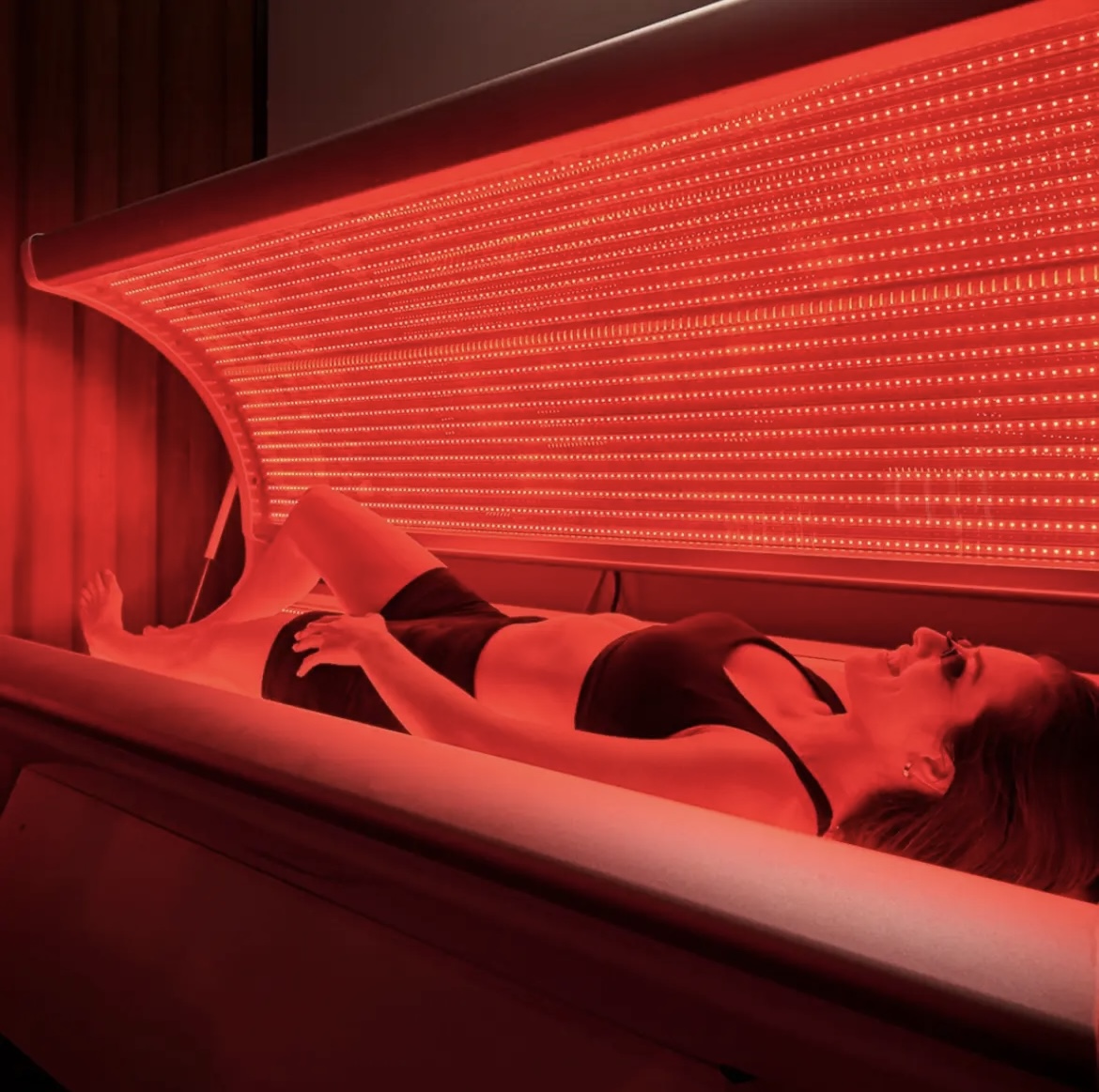
Request an AppointmentThe most common responses seem to be reports of pain reduction, enhanced cognitive function, and skin improvement and increased energy levels. Full-body photobiomodulation treatment exposes your entire body to the benefits of this therapy and helps promote cellular function throughout the body, both on a superficial skin level and deep within the body. Wavelengths used in our TheraLight Red Light Bed include red light 635nm and Near-Infrared light of 810nm, 850nm and 980nm. These light therapy wavelengths work so well with people because they are absorbed by water, and our bodies are made up of on average 55-60% water.
How did interest in red light therapy evolve?
NASA originally began experimenting with red light therapy on plant growth in space and then to help heal wounds in astronauts. Like many developments, other potential uses began to be investigated. In fact, red light therapy is already widely medically accepted in its use in Photodynamic therapy. In this therapy, low-power red laser light is used to activate a photosensitizer drug. The interaction creates a chemical reaction that destroys cells. It’s used to treat some skin conditions, including skin cancer and psoriasis, acne and warts and other types of cancer, pain and inflammation and tissue repair.

How it works:
Red light, at specific wavelengths, is readily absorbed by chromophores in the mitochondria of the body’s cells which activate metabolic energy processes. Red and Near-infrared wavelengths of light promote ATP production, which boost energy transport within the cells, leading to increased cell proliferation. This boost in the body’s natural healing cycle helps reduce inflammation and promotes healing of damaged tissue. Red light therapy is also referred to as photobiomodulation therapy because of the change in the body induced by light.

TheraLight light beds utilize red and near-infrared light for a full-body photobiomodulation experience that exposes the entire body to healing red light that jumpstarts natural healing processes and fights free radicals causing oxidative stress. [1]. Recently, stem cells have shown increased proliferation when irradiated with low-level laser therapy or Photobiomodulation Therapy (PBMT), which induces the activation of intracellular and extracellular chromophores and the initiation of cellular signaling. The findings of this review suggest that PBMT-based regenerative medicine could be a useful tool for future advances in tissue engineering and cell therapy. [19]
Benefits of Near-Infrared Light Therapy:
The human body experiences benefits from certain types of light therapy, including red and near-infrared light. The difference between the two… Near Infrared therapy uses light in the 800 to 1000 nm wavelength range, just outside the visible spectrum of light. Red therapy, however, is found within the visible spectrum. TheraLight light bed combines the two healing forms of light therapy. Below is an explanation of benefits of Near-Infrared therapy on the body:
- Sleep & Mood
- Skin Care
- Wound & Scar Healing
- Sports Performance
- Reduce Pain & Inflammation
Skincare & Hair Benefits
Light in this range stimulates cellular energy that encourages the skin to renew and heal, improving the skin’s look, feel, and texture. NIR light helps the skin recover from injury and provides anti-aging benefits by reducing wrinkles and sagging while promoting elasticity, smoothness, and improved texture.
Photobiomodulation (low-level laser therapy) has also been studied for promoting hair regrowth and may play a significant role in treating conditions such as androgenic alopecia.
Weight Loss With Your Exercise Program
Red and NIR light therapy affects metabolic processes by targeting mitochondria and increasing ATP production, the molecule responsible for energy transport in the body.
This can increase metabolic rate, helping cells burn glucose more efficiently and contributing to fat loss. These treatments are best used alongside a healthy diet and exercise program.
Reduce Cellulite & Firm Skin
Cellulite appears as a dimpled or uneven skin texture due to weak connective tissue and fat deposits beneath the skin.
Red light therapy helps reduce the appearance of cellulite, improves circulation, and supports blood vessel health. Increased collagen production helps firm the skin, especially when combined with exercise and proper nutrition.
Pain
Low-level laser therapy can help treat musculoskeletal conditions such as back pain. Red and near-infrared light stimulate cellular activity, encouraging mitochondria to produce energy more efficiently.
This boosts healing by increasing anti-inflammatory and antioxidant production, helping speed up recovery.
Anti-Inflammatory
Excess inflammation caused by oxidative stress can lead to health issues. NIR therapy increases cellular energy and promotes blood vessel dilation, helping reduce inflammation and support tissue healing.
Injury Recovery
NIR light therapy supports healing of skin injuries and deeper tissue damage by increasing collagen production, accelerating wound healing, and minimizing scarring.
It also helps with sore muscles, joint pain, and repetitive injuries by enhancing the body’s natural healing processes.
Effects on the Brain
Red and NIR light stimulate mitochondrial activity, particularly affecting Cytochrome C Oxidase, which improves cellular energy production.
This enhances oxygenation, circulation, and metabolic activity while promoting anti-inflammatory, antioxidant, and neuroprotective responses.
Research suggests photobiomodulation may support neuron growth, improve brain function, and aid in recovery from neurological conditions.
Alzheimer’s & Dementia
Studies suggest NIR therapy may improve sleep, mood, cognitive function, memory, and attention in patients with neurodegenerative diseases.
Parkinson’s Disease
Early studies indicate that PBMT may improve motor and cognitive function in patients with Parkinson’s disease, although more research is needed.
Traumatic Brain Injury (TBI)
Photobiomodulation shows promise in improving symptoms of traumatic brain injuries, including better sleep, reduced headaches, improved mood, and enhanced cognitive function.
Depression and Anxiety
Light therapy has been shown to reduce symptoms of depression and anxiety, with some studies indicating improvements after just one treatment.
It may also improve sleep quality by increasing natural melatonin production and regulating circadian rhythms.
While research is ongoing, early findings suggest promising benefits for mental health and overall well-being.

This little guy and his tractor soaking up some healing red light after having his eye injured. His eye was swollen and red (and his tractor’s windshield was broken). He came running out saying “we’re all better!!!” The pain, swelling, redness and scratches responded quite rapidly after just 1 session in the bed and significant improvement after the 2nd session!