
Shockwave (EPAT/AWT/ Acoustic wave/ ESWT) is an effective, safe, non-invasive form of treatment that is used for the reduction of cellulite and other skin and body benefits. Shockwave Therapy is one therapy in Dr. Reddy’s unique four part Reddy4Results Protocol for the treatment of cellulite.
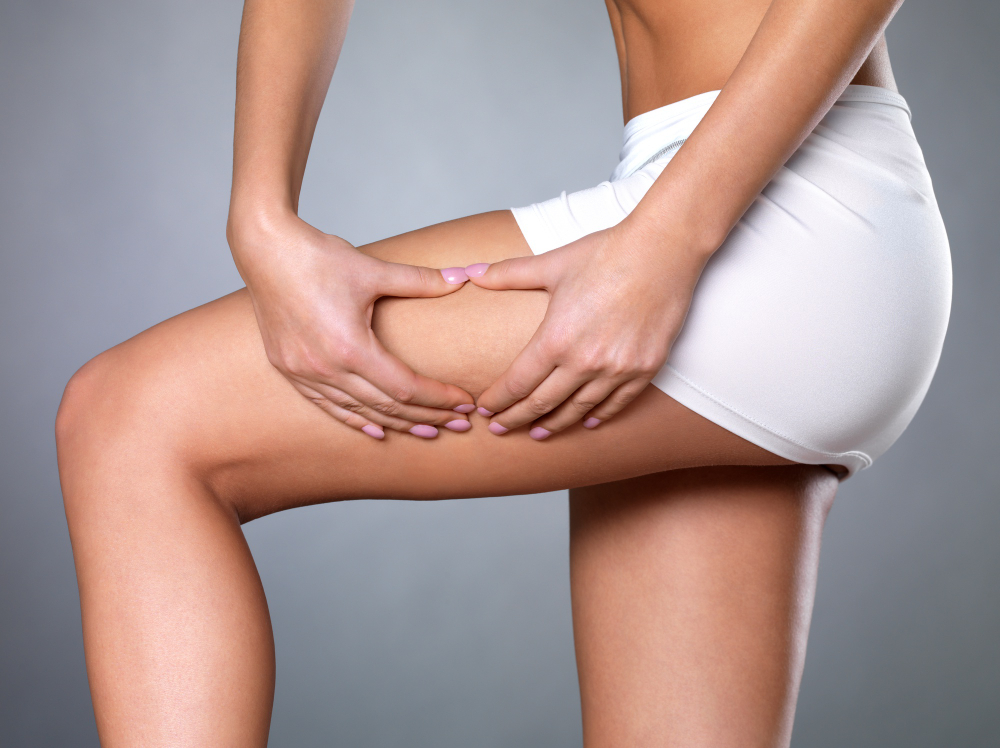
Shockwave Therapy Possible Benefits
- Non-Invasive
- No Anesthesia Required
- No Risk of Infection
- No Scarring
- No Downtime
- Over 80% Patient Satisfaction
- Cost Effective
- Faster, Easier Healing
FAQs
What is EPAT/AWT Shockwave Therapy?
EPAT is also known as Shockwave Therapy and Acoustic Wave Therapy (AWT). Extracorporeal Pulse Activation Technology (EPAT) is the most advanced and highly effective non-invasive treatment method cleared by the FDA. This proprietary technology is based on a unique set of pressure waves that stimulate the metabolism, enhance blood circulation and accelerate the healing process. Damaged tissue gradually regenerates and eventually heals.
Shockwave Therapy was originally developed to treat injuries and chronic pain in joints and muscles. However, it reportedly improved mobility, healing and people also saw a reduction in the appearance of cellulite. This non-invasive procedure represents a proven treatment option for a broad range of conditions and is extremely versatile. It is commonly used to treat cellulite, joint and musculoskeletal pain, erectile dysfunction, to promote smoother results after liposuction or other procedures, and more.
Shockwave is used to treat cellulite wherever it appears on the body, especially on the outer and inner thigh area and buttocks. Shockwave is one of our most powerful techniques specifically for cellulite and works by sending pressure waves to the lower layers of tissue through a series of acoustic pulses that stimulate fat breakdown, collagen synthesis, and lymphatic drainage.
Research Shows Shockwave Therapy May
- Increase skin elasticity
- Stimulate blood and lymph circulation
- Increase membrane permeability
- Remodel collagen within the skin
- Improve skin tone, elasticity and skin thickness by collagen stimulation
- Decrease the subcutaneous fat cell size by lipolysis, and thus decrease the fat pockets causing cellulite
- Improve local circulation and lymphatic drainage to decrease swelling and inflammation
- Stimulate healing and collagen production
What is cellulite?
Cellulite describes a condition where lumps and dimples appear on the surface of the skin, commonly referred to as “orange-peel” and “cottage-cheese”.
Cellulite is not a medical condition that must be treated, but it is a condition that affects the aesthetics of an individual. It affects both men and women, although it is more common in females because the fat distribution and connective tissue are different than in males.
In cellulite, weak connective tissue fibers cause bulging of the septa of the subcutaneous adipose tissue, primarily in the thighs, upper arms, hips, buttocks, and abdomen. This causes dimpling of the skin surface. Cellulite is found almost exclusively in women since men have a different connective tissue structure in adipose tissue. In overweight persons and/or those with weak connective tissue, cellulite can already manifest in young adulthood; with increasing age, varying degrees of cellulite are found in as much as 80 percent of women.
What causes cellulite?
Cellulite is just fat beneath the skin that appears lumpy because it’s pushing against connective tissue and puckering. That’s why over 80% of women have some, whether they’re heavy or thin.
Some factors that predispose you to cellulite are genetic biotype, heredity, ethnic background, body weight, age, hormonal changes, poor diet, smoking, and lack of physical activity. Recently, inflammation has been implicated as a cause. Research shows it can also contribute to the formation of cellulite in women of all ages.
No one really knows the exact cause of cellulite.
The placement of fatty deposits and connective tissue in women are aligned parallel to each other, making the fatty deposit protrude between layers of connective tissue. Placement of fatty deposits and connective tissue are in a criss-cross fashion in men. This is a possible reason why the appearance of cellulite is more common in women.
Another theory is that women undergoing menopause may experience a dip in blood flow to the connective tissue under the skin. Lower blood flow means there is less oxygen in the area, causing lower production of collagen.
Intrinsic aging may also be a contributing factor for the appearance of cellulite. Aging causes skin to lose its firmness and elasticity. This increases the chance of cellulite forming especially on the thighs and buttocks.
Shockwave Therapy: Effective treatment for cellulite
Shockwave therapy is a device used by many disciplines in medicine such as orthopedics, physiotherapy, sports medicine, and even veterinary medicine. It has been used by healthcare providers for many years to treat chronic pain and to restore mobility. It is an effective non-surgical treatment to speed up recovery for people suffering from acute or chronic pain.
Other than treating chronic pain, Shockwave Therapy has been studied and shown to be effective for cellulite treatment. Undergoing shockwave therapy disrupts the fibrous tissue responsible for the uneven appearance on the skin. By repeatedly applying constant pressure on the affected area, it improves the stimulation of blood flow and lymph circulation.
The increase in the exchange of blood lipids stimulates the metabolism of fatty deposits. In addition, the treatment triggers the skin to produce more collagen and elastin fibers.
Collagenometry taking high-frequency high-resolution ultrasound measurements of the extra-cellular matrix of the skin before and after treatment with low energy defocused ESWT. Case of improvement – score of +2 (clear improvement).
How is Shockwave Therapy Performed?
Shockwave Therapy (or extracorporeal shockwave therapy (ESWT)) targets fat fibers with powerful sound waves in much the same way it’s been breaking up kidney stones for years. Our highly skilled practitioners use an FDA-cleared soundwave device to direct vibrating waves against your fibrous tissue, shattering it, so your body can safely expel it.
First, you will have a consultation with your shockwave therapy provider. During your consultation, you will discuss your medical history, current cellulite concerns, medications you are taking, and your expectations. Your cellulite therapy provider will answer questions you may have, recommend treatment options, pricing, and discuss a protocol that is right for you.
On the day of your procedure, you will lie down on a comfortable treatment table. Your specialist will then administer the Shockwave Therapy device over your treatment area. A typical session lasts no longer than 15 to 20 minutes per area.
Our shockwave is delivered by placing a probe up against the areas of cellulite. As it passes over the area, it emits radial waves through the skin. The treated cells are then flushed away through the body’s natural removal process and continue for up to 3 months.
How long is a Treatment Session?
A typical ESWT Shockwave Therapy session takes anywhere from 15 to 20 minutes per area. First, we apply a conducting gel to the area you want treated. Then we move the acoustic wand over the skin’s surface, administering a strong, vibrating pulse. Pressure, length of session, and intensity will depend on your particular treatment areas, severity of your cellulite dimpling, and therapy tolerance.
As a part of Cell-U-Light Therapy Center’s unique protocol, your treatments will include circulation and lymphatic therapy administered by two different devices and at the conclusion of your session package, during the 6 week repair and healing phase, you will undergo treatment in our Theralight Fit full body laser bed twice a week for four weeks for a total of 8 treatments.
This part of your treatment further improves circulation and lymphatics while further promoting collagen production and cellular repair and regeneration. Additional benefits that can be seen with use of the Theralight treatment (photobiomodulation) include decreased pain and inflammation, arthritis, nerve pain and nerve regeneration, tendinopathies, soft tissue healing, anxiety and depression, improved skin appearance and elasticity, improved muscle performance and recovery. See Theralight Photobiomodulation brochure for more details.
Do I need anesthesia for the therapy?
Shockwave Therapy is done in a comfortable treatment room in the office without any need for anesthetic or pain medication.
Is Shockwave Therapy painful?
Your provider will minimize the discomfort of the treatment by skillfully manipulating the tissue and the direction of the pressure wave pulses. For most areas, such as the thighs and buttocks, the discomfort is minimal. You will feel a strong vibration during the procedure, but there won’t be any major discomfort.
The tenderness felt during or just after completion of the treatment may be moderate, but typically passes in 48 hours or less. Over-the-counter pain relievers can help reduce the level of discomfort until it passes.
What will I experience during treatment session?
The treatment itself is quite noisy, making a loud knocking sound. We suggest you bring headphones to block out the annoying sound. You will lie down on the treatment table and relax.
What are the potential risks of Shockwave Therapy?
The most common risks are temporary, such as bruising of the treated area, pinpoint bleeding of the skin, and superficial spider veins. Be sure to discuss all medications and health conditions during your initial consultation, so you can get the most out of your treatment and minimize your risk of side effects.
Are there side effects?
Unlike surgery or medications, Shockwave Therapy causes few or no side effects. You will feel a strong vibration during the procedure, but there won’t be any major discomfort. Afterward, you may experience slight discomfort, redness, hematomas, skin lesions with cortisone use, bruising, swelling, or sensitivity that will resolve on its own.
Sensitivity and bruising may last up to 10 days before resolving. Over-the-counter pain relievers can help reduce the level of discomfort until it passes.
Is there any downtime?
No, you can go back to work and daily life immediately.
Although there is no downtime after a treatment, it is recommended to take it easy for approximately 48 hours afterwards.
When will I see results?
You may see some visible results after 1 session. Most patients, though, will see visible results after 4 to 5 treatments. It often takes 6 or more treatments to achieve more dramatic changes to the condition. Full benefits, though, will take up to 3 months to develop as the damaged tissue is expelled and new healthier tissue develops.
Am I a candidate for Cellulite Shockwave Therapy?
Because shockwave is so safe and non-invasive, most patients with any degree of cellulite are good candidates. However, some individuals are not candidates for this therapy.
Contraindications or precautions include:
- Being under 18 years of age
- Having an infection
- Having open growth plates or metal pins
- Receiving treatment for a malignant tumor
- Managing nerve or circulation disorders (neuropathy or vasovagal sensitivity)
- Taking anticoagulants or blood-thinning medications
- Coagulation disorders (hemophilia)
- Use of anticoagulants, especially Marcumar
- Thrombosis
- Heart conditions
- Pacemaker or defibrillator
- Tumor diseases or carcinoma
- Pregnancy
- Cortisone therapy up to 6 weeks before ESWT treatment
How does Shockwave Therapy work?
Powerful sound waves stimulate microcirculation within the fat layer, increasing metabolic function. Free fatty acids and glycerol are released from fat cells and naturally removed by the body.
The sound waves also stimulate connective tissue, improving skin firmness and reducing dimpling.
Shock waves create micro-tears in connective tissues while breaking down fatty deposits. The body responds by increasing collagen production, replacing damaged tissue with denser, rejuvenated collagen fibers. This results in firmer, smoother skin.
The treatment is delivered via a handheld device that sends acoustic waves deep into connective tissue, creating strong, energized pulses and vibrations.
What areas can be improved with Shockwave Therapy?
Shockwave therapy is most often used to treat cellulite on areas such as the outer and inner thighs, buttocks, and abdomen.
How many sessions are commonly needed?
The number of sessions depends on the severity of cellulite and individual response to treatment.
Some patients may achieve desired results after a single series of 6 treatments, while others may need more.
A typical treatment plan includes:
- 6–12 treatments performed twice per week for 3–6 weeks
- Severe cases may require up to 18 treatments across multiple series
Treatment plans are highly individualized and results are assessed throughout therapy.
What results will I get? Is there any guarantee that Shockwave will work for me?
Cellulite can affect anyone, and results vary by individual. While many patients experience significant improvement, results cannot be guaranteed.
Studies show a success rate of up to 75% or more for noticeable improvements in smoother, firmer skin. High satisfaction rates have also been reported, with many patients willing to repeat the treatment.
How long do the results last? Long term results
Results are long-lasting and involve structural changes to the tissue. They may last 2+ years and can potentially be more permanent.
Maintenance treatments are recommended once or twice per year to maintain and enhance results as aging continues.
Other benefits of Shockwave Therapy
In addition to reducing cellulite, the therapy stimulates collagen production, rejuvenates connective tissue, improves skin elasticity, and results in firmer, smoother, tighter skin.
Aftercare
- Drink 2–3 liters of water daily to help flush out damaged tissue and fat cells
- Reduce caffeine intake
- Exercise after treatment to stimulate lymphatic drainage
- Avoid ice, aspirin, ibuprofen, and anti-inflammatory medications during treatment
- Use Tylenol or acetaminophen if needed
- Avoid hot baths, steam, or heat treatments for 24 hours
- Avoid smoking and alcohol for 48–72 hours
What is my recommended therapy series and frequency
Your provider will recommend a treatment plan based on your condition and goals. General guidelines include:
Mild cellulite: 1 series, twice per week for 3–4 weeks
Moderate cellulite: 1–2 series, twice per week for 6 weeks
Severe cellulite: 2–3 series, twice per week for 6–9 weeks
Final results are typically assessed 12 weeks after the last treatment, with full benefits developing over up to 3 months.
What is an area?
Treatment areas are defined as specific body regions, including:
- Abdomen: From under bra crease to above pubic bone
- Buttocks: From sacral bone to crease under buttocks and sides to hip bone
- Flanks/Hips/Love Handles: From under bra line to hip bone and gluteal crease
- Thighs: Front or back from above knees to under buttocks, including inner thighs
Multiple areas can be treated in one session depending on appointment length.
Factors that contribute to cellulite
Factors include poor diet, slow metabolism, aging, lack of exercise, hormonal changes, dehydration, body fat percentage, genetics, and skin thickness or color.
Cellulite and aging
As we age, collagen and elastin production decreases, causing skin to lose elasticity and firmness. This leads to sagging, dimpling, and increased visibility of cellulite.
Cellulite and Weight gain?
Weight gain can enlarge fat cells, which push against the skin and reduce connective tissue elasticity. This contributes to the dimpled appearance of cellulite.
Cost of cellulite reduction Cell-U-Light Therapy
Pricing is determined during consultation based on treatment areas, cellulite severity, and number of sessions required.
Most treatment series include 6–8 sessions and may involve multiple series. Maintenance sessions typically cost $300 per area.
Results can last 2+ years, with maintenance recommended every 6–12 months.